How to Choose the Best Dell Monitors for Your Needs?
In today's digital landscape, choosing the right monitor can significantly enhance your productivity and enjoyment. Dell Monitors have established a reputation for quality and performance, boasting an impressive range of options. According to the latest industry reports, around 70% of professionals prioritize monitor quality for their workstations. This trend underlines the importance of making an informed choice.
When evaluating Dell Monitors, consider your specific needs. Resolution, screen size, and refresh rate are crucial factors. A study by DisplayMate states that nearly 90% of users notice performance differences between various display types. This gap can impact overall user satisfaction and efficiency. Different applications require different features; gaming, graphic design, and general use all demand unique specifications.
Each person's needs are different. Some users may find difficulty in selecting the right model. The vast selection can be overwhelming. However, understanding the features aligned with your workflow is essential. Many overlook the importance of ergonomics and connectivity options. Paying attention to these aspects can transform your daily computing experience.
Understanding Your Monitor Needs: A Comprehensive Approach
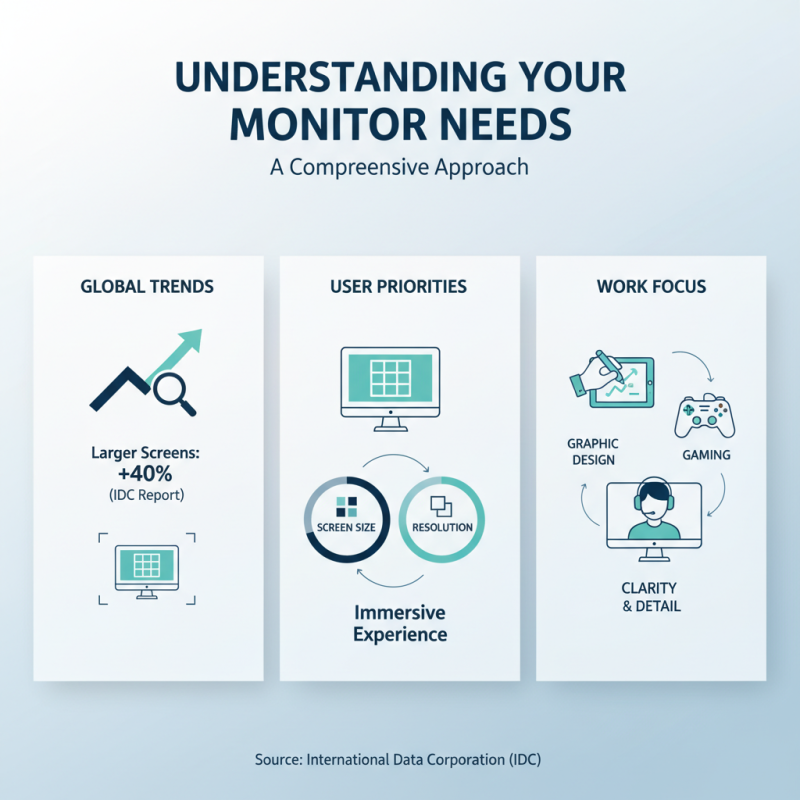
When choosing a monitor, it's crucial to understand your specific needs. A report by the International Data Corporation (IDC) states that preference for larger screens has surged by 40% in recent years. Users often prioritize screen size and resolution for an immersive experience. This trend affects types of work, like graphic design or gaming, where clarity and detail matter significantly.
Consider your typical usage scenario. For professionals in design, a monitor with high color accuracy is vital. According to the Display Screen Equipment Guidelines from the Health and Safety Executive (HSE), ergonomic factors also play a critical role. Too many hours in front of screens can lead to various health issues. The angle, height, and distance of your monitor can prevent digital eye strain. Yet, many still overlook this aspect.
Budget is another factor to ponder. While a higher price can indicate better quality, it doesn't guarantee it fits your specific needs. Many users find themselves settling for less than ideal options simply due to price. A thoughtful review of specifications and required features is essential. Not everyone needs the latest technology, yet many choose it out of habit. Evaluate your needs carefully before making a decision.
Assessing Key Specifications: Resolution, Size, and Panel Type
Choosing the right monitor can be overwhelming. Start by assessing the resolution. Resolution determines image clarity. A higher resolution offers sharper text and vivid colors. Full HD is a standard, but 4K enhances detail. It’s crucial for graphic design and gaming. However, 4K monitors can strain older hardware. Consider your needs carefully.
The size of the monitor also plays a significant role. Larger screens provide a more immersive experience. A 27-inch model is suitable for multitasking, while a 32-inch offers expansive views. However, be mindful of your space. A large monitor in a cramped area can be uncomfortable. Positioning is key too.
Panel type influences color accuracy and viewing angles. IPS panels deliver vibrant colors and wide angles. TN panels, on the other hand, are faster but less colorful. Exploring different panel types can help you find the best fit. Always remember to check user reviews and compare specs before purchasing. Your ideal monitor should align with both your workspace and creative or professional requirements.
Comparison of Monitor Specifications
This bar chart displays the popularity of different monitor resolutions among users. As seen, 1080p remains the most popular choice, while the Ultrawide resolutions are gaining traction but have lower adoption rates.
Exploring Different Dell Monitor Series and Their Features
When exploring different monitor series, it's vital to understand their unique features. Each series caters to various user needs.
Professional users often seek high color accuracy. Gamers may prioritize refresh rates and response times.
Casual users might favor budget-friendly options.
Dell offers several monitor lines. The UltraSharp series shines in color fidelity, catering to graphic designers and photographers.
The P series focuses on versatility, perfect for office environments. There’s also the S series, which balances
affordability and performance for everyday tasks.
Not every series fits every purpose. Users need to reflect on their specific requirements. Some might overlook essential features.
For instance, a gamer might ignore color accuracy, focusing solely on speed. It’s crucial to assess what truly matters for your usage.
A well-informed choice leads to a better experience, tailored to your needs.
Comparing Budget vs. High-End Dell Monitors for Work and Play
When comparing budget and high-end monitors, understanding your needs is crucial. Budget monitors often provide decent performance for typical tasks. They are great for web browsing, document editing, and casual gaming. You can find options with good color accuracy and decent refresh rates. However, they might lack features essential for professional work, like extensive connectivity and ergonomic adjustments.
On the other hand, high-end monitors cater to gamers and professionals. They typically offer superior color reproduction and higher resolution. Features like 4K resolution and ultrawide screens enhance productivity and create immersive experiences. Yet, they come at a premium. It's essential to weigh whether these features justify the cost. Assess what you'll use it for. Sometimes, a mid-range option could suffice without overspending.
Reflect on your daily tasks. If intensive graphic design or gaming is part of your routine, investing in better quality is wise. However, if your needs are basic, a budget option could be a practical choice. It's about finding balance between performance and cost-effectiveness for your specific tasks.
Evaluating Additional Features: Ergonomics, Connectivity, and Warranty
When selecting a monitor, ergonomics plays a crucial role. Adjustable stands can help create a comfortable viewing height. This reduces neck and back strain during long hours of use. Look for features like tilt, swivel, and height adjustments. These can transform your workspace into a healthier environment. Many users overlook these aspects but regretting it later is common.
Connectivity options are equally important. Ensure the monitor supports various ports that cater to your devices. HDMI, DisplayPort, and USB-C are popular choices. A wide range of options makes switching devices easier. Some monitors even offer built-in USB hubs for added convenience. Users often find it frustrating when their new monitor doesn’t match existing setups.
Warranties are another factor to consider. A strong warranty reflects the manufacturer's confidence in their product. Look for coverage that extends beyond one year. It’s wise to read customer reviews about service experiences. Some users have faced challenges when seeking support. Assessing these features can lead to a better overall choice. Prioritize what matters most to your workflow and needs.