Top Server GPU Cards Tips for Optimal Performance and Cost?
In the competitive landscape of data processing, optimizing the use of Server GPU Cards can significantly impact performance and cost-efficiency. Dr. Nathan Reeves, a leading expert in GPU architecture, once stated, "Choosing the right GPU is essential for maximizing productivity in server environments." His insights underscore the importance of strategy in selecting Server GPU Cards that best meet workload demands.
Server GPU Cards have become pivotal in industries requiring high computational power. Businesses face challenges in identifying the most suitable options. Factors such as power consumption, compatibility, and workload types all play critical roles. Failing to address these can lead to underperformance and increased costs.
The evolving technology landscape means constant updates in GPU capabilities. This dynamic environment complicates decision-making for many organizations. It’s vital to assess both current needs and future scalability. Investing in the wrong Server GPU Cards may lead to regret down the line. Ultimately, informed choices will determine success in harnessing GPU technology effectively.
Understanding GPU Architecture for Server Performance
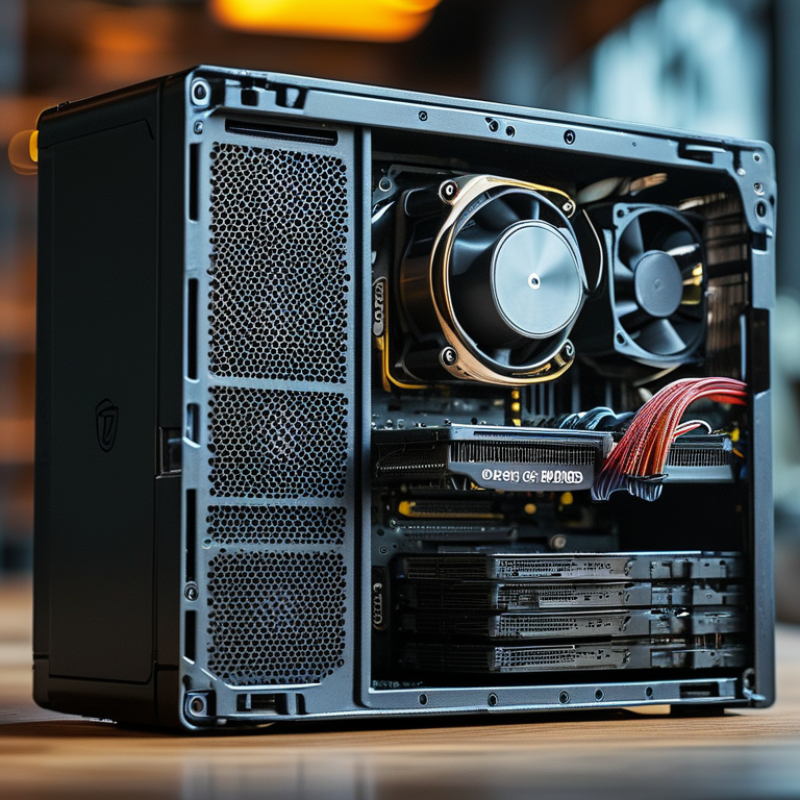
When considering GPU architecture for server performance, the layout and design are crucial. Key aspects include memory bandwidth, processing cores, and thermal management. A study by Jon Peddie Research found that memory bandwidth is vital for efficient data processing in AI workloads. High bandwidth directly impacts the speed of data transfer, which is essential for real-time applications.
Additionally, the architecture’s parallel processing units play a significant role. For instance, NVIDIA’s Ampere architecture reportedly provides up to 54% improved performance per watt compared to previous generations. This increase signifies enhanced efficiency, particularly in large-scale deployments. However, balancing power consumption with performance remains a challenge for many organizations.
Thermal management is another critical factor. Overheating can throttle performance, leading to suboptimal results during peak loads. Regularly monitoring thermal conditions can prevent costly downtimes. According to a report from the International Data Corporation (IDC), about 30% of server failures arise from thermal issues. This data underscores the necessity of maintaining ideal thermal environments for optimal GPU performance in servers.
Evaluating Cost-Effectiveness of Different GPU Models
When considering the cost-effectiveness of GPU models, it's crucial to analyze their performance metrics and price points. A recent industry report from Jon Peddie Research indicates that the demand for powerful GPUs is on the rise, particularly in data centers, deep learning, and AI applications. The price-to-performance ratio significantly varies among models. Selecting the right GPU can greatly influence operational costs.
One key tip is to assess the specific use case of the GPU. For instance, some GPUs excel in parallel computing tasks, yielding better performance for AI models. Others may offer better efficiency in graphics rendering. Evaluating power consumption is also essential. A GPU that consumes more power might appear cheaper upfront but could lead to higher operational costs over time.
Comparative analyses show that some high-end GPUs can outperform mid-range models but at a much higher acquisition cost. Balancing performance needs against budget constraints is vital. An effective strategy is to consider future scalability. Investing in a slightly higher-priced GPU can save costs in the long run if it can handle increased workloads without requiring upgrades.
Top Server GPU Cards Cost-Effectiveness Analysis
Cooling Solutions for Server GPUs: Optimizing Thermal Management
Efficient thermal management is essential for server GPUs. High-performance graphics cards generate considerable heat. Without proper cooling, performance drops. The lifespan of the hardware can also diminish. Hot environments lead to thermal throttling, reducing processing speeds.
Liquid cooling solutions can be highly effective. They offer superior heat dissipation compared to traditional air cooling. However, they require careful installation and maintenance. Not all data centers are equipped for such systems. Airflow management plays a critical role. Ensure that there is adequate space around the GPUs. This allows for free airflow, preventing hotspots.
Choosing the right thermal paste is often overlooked. Quality paste can improve heat transfer between the GPU and heat sink. Regularly monitor temperatures for signs of overheating. Over time, dust buildup can impede airflow. A simple cleaning can restore efficiency. Reflecting on these areas can lead to better performance.
Top Server GPU Cards Tips for Optimal Performance and Cost - Cooling Solutions for Server GPUs: Optimizing Thermal Management
| GPU Model |
Core Count |
Memory Size (GB) |
Cooling Type |
TDP (W) |
Optimal Operating Temp (°C) |
| GPU A |
3584 |
16 |
Active Air Cooling |
250 |
70 |
| GPU B |
5120 |
32 |
Liquid Cooling |
300 |
75 |
| GPU C |
3584 |
24 |
Hybrid Cooling |
220 |
68 |
| GPU D |
4096 |
16 |
Active Air Cooling |
275 |
72 |
| GPU E |
6144 |
48 |
Liquid Cooling |
350 |
78 |
Best Practices for Configuring GPU Resource Allocation in Servers
Configuring GPU resource allocation in servers is crucial for optimizing performance and cost. A recent report from the International Data Corporation (IDC) indicates that organizations leveraging GPU resources efficiently can experience performance improvements of up to 2.5 times compared to those with poorly optimized setups. This stark difference emphasizes the importance of careful configuration.
One effective practice involves workload prioritization. By analyzing application demands, you can allocate resources based on necessity. For instance, machine learning tasks often require a significant amount of GPU memory. Allocating dedicated GPUs for these tasks improves processing time drastically. However, over-allocation can lead to inefficiencies and wasted resources. Balancing the load ensures that no single GPU is overburdened while others remain idle.
Monitoring resource usage provides insights into system performance. Tools like NVIDIA's GPU Cloud offer real-time data, enabling staff to adjust allocations accordingly. Yet, collecting and interpreting such data can be overwhelming. Many organizations struggle with optimizing their configurations based on this information. This highlights a gap in expertise and underscores the need for continuous learning and adjustment in GPU management practices.
Scaling Performance: Strategies for Multi-GPU Environments
In multi-GPU environments, achieving optimal performance requires strategic planning. Recent studies indicate that systems with four or more GPUs can deliver up to 80% higher performance compared to single-GPU setups. However, this benefit comes with challenges. Efficiently managing power consumption and thermal output is crucial. Often, inadequate cooling leads to throttling, which can negate performance gains.
Using software for load balancing can significantly improve resource utilization, allowing each GPU to operate at peak capacity. A well-configured machine learning model can leverage multiple GPUs, reducing training time by up to 70%. But the task of optimizing workflows can be complex. Relying solely on templates may overlook unique requirements of specific applications.
Cost management is equally vital in multi-GPU setups. Data from recent industry reports suggest that organizations often underestimate the operational costs linked to power and cooling. This can inflate budgets unexpectedly. Regularly evaluating hardware performance alongside software demands can ensure efficient spending. Building a multi-GPU infrastructure is not just about assembling components. It involves continuous refinement and adaptation to meet evolving performance and cost goals.