Top Ethernet Router Options for Home and Office Networks?
In today's digital age, an efficient Ethernet Router is vital for both home and office networks. Users demand high-speed connections, reliability, and security. Choosing the right Ethernet Router can significantly impact your online experience. There are numerous brands and models available, making selection challenging.
Consider factors such as speed, range, and ease of setup when evaluating options. Some routers claim to offer outstanding performance. However, the actual experience can vary. Users often find themselves frustrated with dropped connections.
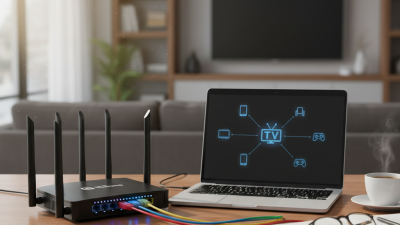
Visualize a busy home office where multiple devices connect simultaneously. An unreliable Ethernet Router leads to lagging video calls and interrupted downloads. Recognizing the importance of a quality router can prevent these hassles. It's crucial to reflect on your specific needs and usage patterns before making a decision. A little research can lead to a happier, smoother networking experience.

Top Ethernet Router Options for Home and Office Networks
When choosing an Ethernet router for home or office use, several factors should be considered. A reliable router is essential for stable connections. Look for models that support the latest Ethernet standards. Speed and bandwidth are crucial for multiple devices. A dual-band option could optimize wireless performance. However, not all dual-band routers perform equally. Some may struggle under heavy loads.
Another important aspect is the number of ports. A router with multiple Ethernet ports can connect several devices at once. This feature is often overlooked. Consider your current needs and future growth. You may need to connect printers, gaming consoles, or smart devices. Make sure the router can handle expansion.
Security is also a top concern. An Ethernet router should offer robust security features. Look for options that support the latest encryption protocols. Many users underestimate the importance of this. A simple setup can lead to vulnerabilities. Take time to configure settings properly. This is not just about speed; your data's safety matters too.
Understanding Ethernet Router Specifications: Key Terms and Metrics
When choosing an Ethernet router, understanding specifications is essential. Key terms can impact your network performance significantly. For example, speed metrics like Mbps (Megabits per second) are crucial. Many routers offer speeds ranging from 100 Mbps to several gigabits. However, your actual speed may differ from advertised rates.
Latency is another important term. It measures the delay in data transmission. Lower latency, ideally under 20 milliseconds, enhances online activities like gaming and video calls. According to industry reports, users often experience higher latencies during peak hours. This can lead to frustrating lag and buffering issues, especially in larger households or offices.
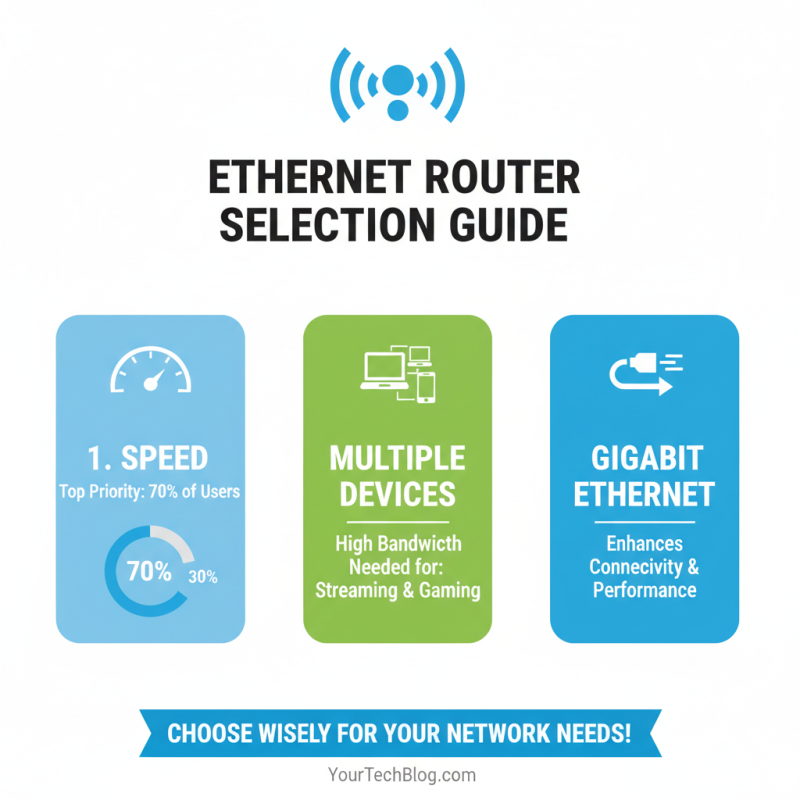
Furthermore, consider the number of Ethernet ports. Most routers come with four to eight ports. But, do you need more? If multiple devices connect via Ethernet, additional ports could be beneficial. Wireless capabilities also matter. Dual-band or tri-band routers can handle more traffic. Yet, they may be more complex to set up, which can deter some users. Balancing performance and usability is key when selecting an Ethernet router for home or office networks.
Top Ethernet Router Options for Home and Office Networks
| Router Model |
Max Speed |
Ports |
Wi-Fi Standard |
Coverage Area |
| Model A |
1000 Mbps |
4 |
Wi-Fi 6 |
2500 sq ft |
| Model B |
1200 Mbps |
6 |
Wi-Fi 5 |
3000 sq ft |
| Model C |
2000 Mbps |
8 |
Wi-Fi 6 |
3500 sq ft |
| Model D |
1500 Mbps |
5 |
Wi-Fi 5 |
2200 sq ft |
Comparative Analysis: Speed, Range, and Port Configuration of Routers
When selecting an Ethernet router, speed, range, and port configuration are key factors. Recent industry data suggests that a router can deliver speeds ranging from 100 Mbps to over 10 Gbps. Users often underestimate the impact of speed on daily tasks. Streaming, gaming, and working from home all demand high bandwidth. A router with speeds over 1 Gbps is typically preferred for demanding activities.
Range is another crucial aspect. Many routers claim to cover areas up to 3000 square feet, but real-world performance often falls short. Obstacles like walls and furniture can significantly reduce coverage. A dual-band router can help. It operates on both 2.4 GHz and 5 GHz frequencies, effectively enhancing range and reducing interference. However, users may find the dual-band approach unnecessary for smaller spaces.
Port configuration also matters. Routers typically offer four Ethernet ports. However, power users might desire more for additional devices. Some advanced setups support link aggregation, combining multiple connections for better performance. It's essential to reflect on one’s needs; extra ports might seem excessive now but become necessary as more devices connect to the network. Choosing the right configuration is sometimes overlooked but can have long-term implications.
Top Brands and Models: Industry Recommendations for Performance and Reliability
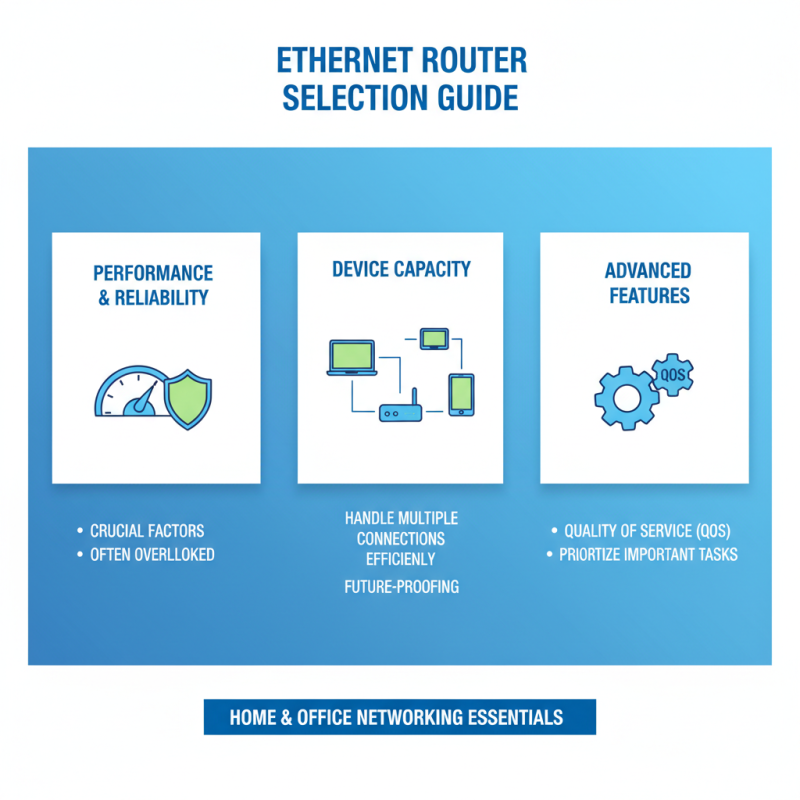
When selecting an Ethernet router for home or office, performance and reliability are crucial. Many people overlook these aspects when making their choice. It’s vital to consider how many devices will connect. A router that can handle multiple connections efficiently is a must. Look for options with advanced features like Quality of Service. This can help prioritize important tasks.
Some models stand out due to their speed and stability. High-speed routers can deliver internet at lightning-fast rates. Users often report less buffering during streaming. Those who work from home will appreciate the improved responsiveness during video calls. However, some users might find initial setup confusing. Documentation can be vague, leading to frustration.
On the other hand, a well-reviewed router may not work perfectly for every situation. Users should assess their specific needs carefully. If you live in a large space, range becomes a vital factor. Sometimes, even top-rated routers struggle to cover extensive areas. Testing different placements may yield better results. Don’t hesitate to reach out to support if issues arise.
Conclusion
The article "Top Ethernet Router Options for Home and Office Networks" explores essential factors for selecting the best Ethernet router tailored to both personal and professional needs. It begins with an overview of key specifications and terminologies that are crucial for understanding router performance, such as speed, range, and port configuration.
A comparative analysis highlights the critical metrics that differentiate various models, aiding consumers in making informed choices. Furthermore, the piece emphasizes the importance of considering specific network requirements, such as the number of devices or the types of activities that will occur on the network. Finally, it discusses future trends in Ethernet technology, offering insight into upcoming advancements that may shape home and office networking experiences. This comprehensive guide serves as a valuable resource for anyone looking to optimize their internet connectivity with the right Ethernet router.