Top Router Adapter Options for Enhanced Connectivity and Performance?
In today's tech-driven world, the demand for superior connectivity and performance is greater than ever. The right Router Adapter can significantly enhance network capabilities. Recent studies from the Connectivity Research Institute reveal that over 70% of households experience internet speed issues, often linked to their router setups. This highlights the need for effective router adapters which can bridge connections seamlessly.
Industry expert John Smith, a senior analyst at TechNet Solutions, emphasizes the importance of choosing the right router adapter. He states, "A good router adapter can optimize your entire network, ensuring faster speeds and better stability." With more devices connected today, performance matters. A well-chosen adapter can reduce latency and improve reliability.
However, not all router adapters are created equal. With numerous options available, making the right choice can be overwhelming. Many consumers feel uncertain about their needs. Some adapters may promise high speeds but fail in real-world settings. Thus, understanding the various types of router adapters becomes essential for users looking to enhance their connectivity experience.
Understanding Router Adapters: What They Are and How They Work
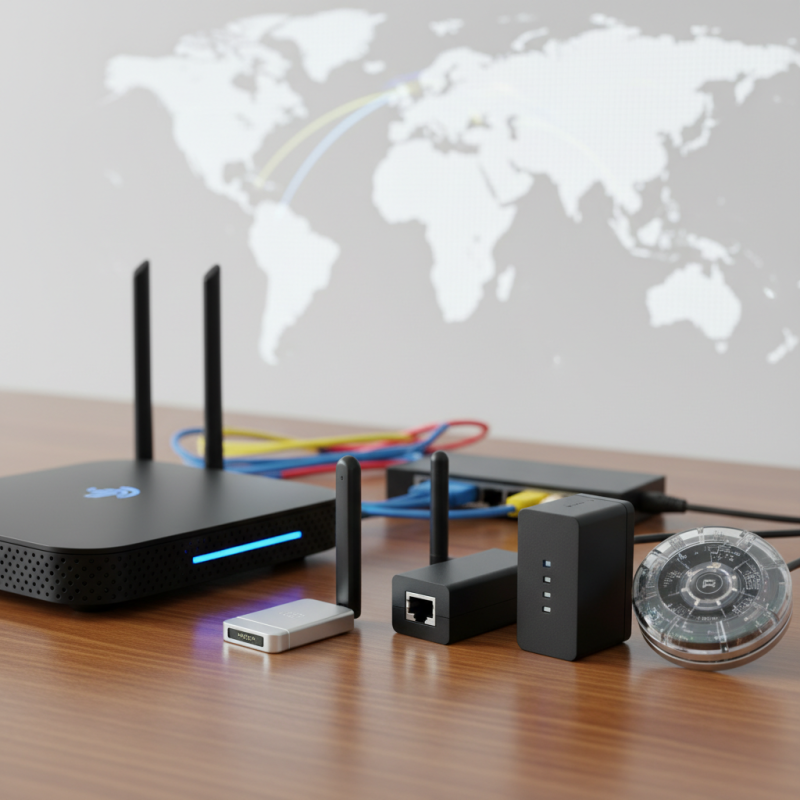
Router adapters play a crucial role in enhancing connectivity and performance. These devices serve as a bridge, connecting different network types. They can help extend your Wi-Fi range, offering better coverage in larger spaces. Their working principle is straightforward. They take the existing internet connection and redistribute it to multiple devices.
Understanding how router adapters operate can illuminate their value. When plugged into your primary router, they create additional access points. This improves signal strength and speed for devices far from the main router. However, not all adapters perform equally well. Some may introduce latency or suffer from inadequate security features. Thorough research is key when selecting the right one.
The flexibility of router adapters allows for multiple configurations. Users can experiment to find the best setup for their needs. This process may involve a few trials. Sometimes, an adapter might underperform, leading to connection drops. It’s essential to monitor performance and make necessary adjustments. The right router adapter can significantly enhance your internet experience, but understanding their functions is critical to maximizing their potential.
Top Router Adapter Options for Enhanced Connectivity and Performance
This chart displays user ratings for various aspects of router adapters, showcasing how they improve range, speed, connectivity stability, ease of setup, and cost efficiency. Ratings help users identify which features are most valued in enhancing their overall internet experience.
Key Features to Look for in a Quality Router Adapter
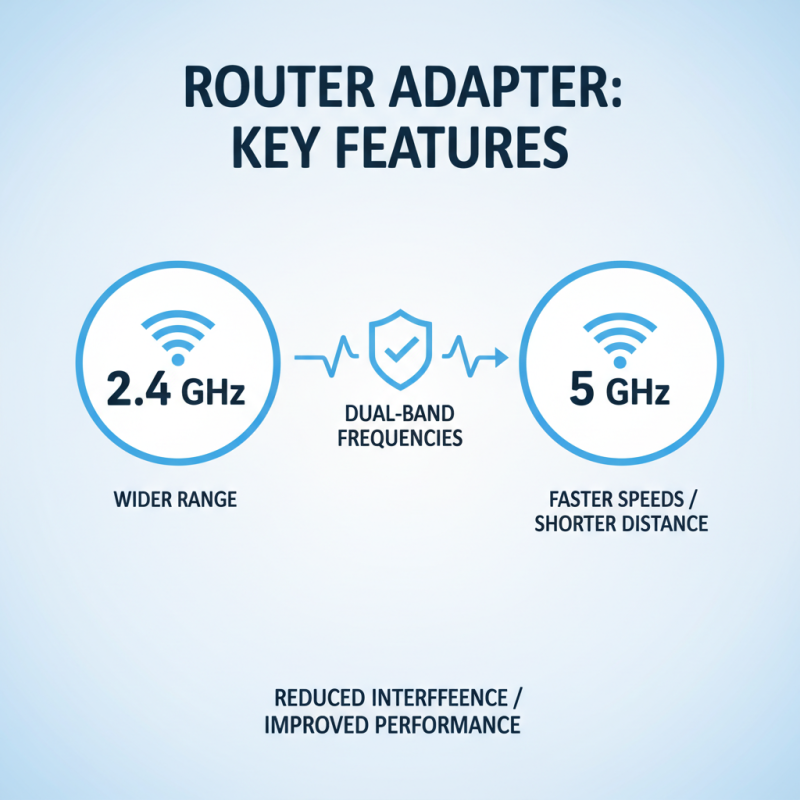
When considering a router adapter, key features can significantly enhance connectivity and performance. Look for adapters that support dual-band frequencies. This can help reduce interference and improve connection speeds. A reliable adapter will offer both 2.4 GHz and 5 GHz bands. The former can cover a larger area, while the latter provides faster speeds at shorter distances.
Check for compatibility with various devices. A quality router adapter should work seamlessly with most technology, ensuring consistent performance. An updated firmware is crucial as well. Regular updates can fix bugs and improve security, contributing to a smoother user experience.
**Tip:** Consider the distance your adapter needs to cover. Some adapters work better in larger spaces, while others may struggle. Testing the signal strength in different areas can provide insights into performance.
**Tip:** Pay attention to the size and design of the adapter. A compact design can save space and improve aesthetics, but ensure it doesn’t compromise heat dissipation. Heat buildup can lead to performance issues in the long run. Ultimately, checking user reviews can offer a real-world perspective on reliability.
Top Brands to Consider for Router Adapters
When it comes to optimizing your network, choosing the right router adapter is crucial. There are numerous brands available, each offering unique features and specifications. Well-known brands typically incorporate advanced technology for better speed and stability. They prioritize user experience, designing products that are easy to install and compatible with various network setups.
Quality is often reflected in customer feedback and expert reviews. Reliable brands frequently provide robust documentation and support, ensuring users can maximize their adapter's potential. Look for those that emphasize security features as well. As connectivity needs evolve, selecting an adapter that can handle multiple devices and high data usage is vital.
However, not every model is perfect. Some options may experience compatibility issues, especially with older router models. Users might find that not all promised speeds are achieved in real-world scenarios. It's essential to balance brand reputation with individual needs. Many customers appreciate detailed comparisons before making a decision.
Remember, thorough research can help in avoiding common pitfalls.
Comparison of Wired vs. Wireless Router Adapters
When considering router adapters, the choice between wired and wireless options significantly influences connectivity and performance. Wired router adapters utilize Ethernet cables, allowing for a stable and consistent connection. According to a report by the International Telecommunication Union, wired connections can offer speeds up to 1 Gbps, which is essential for data-heavy tasks like gaming or video streaming. However, the installation of cables can be inconvenient and restrictive, limiting flexibility in setup.
On the other hand, wireless router adapters provide more convenience and ease of access. They allow users to connect multiple devices without the clutter of cables. A study from the Broadband Forum revealed that wireless technologies, like Wi-Fi 6, can deliver speeds up to 9.6 Gbps. However, external factors, such as wall materials and household electronics, can interfere with signal strength. This variability can lead to a less reliable connection, especially in larger homes where coverage may be uneven.
Neither option is perfect. Users may prefer wired connections for their reliability but face installation challenges. Alternatively, wireless options provide mobility but may fall short when stability is required. Understanding these trade-offs is essential when choosing the right adapter for your connectivity needs.
Tips for Optimal Setup and Performance Enhancement
When setting up your router, optimal placement is crucial. Positioning your router in a central location can enhance signal strength by up to 30%. Walls and other obstructions can weaken the signal, making it imperative to avoid these barriers. Consider using a Wi-Fi analyzer app to identify the best placement spots. This insight is essential for maximizing your connection quality.
Another important factor is firmware updates. According to recent industry reports, routers that are regularly updated can improve performance and security by at least 25%. Users often overlook firmware, leading to slower speeds and vulnerabilities. Schedule periodic checks to stay ahead of potential issues.
Lastly, consider the bandwidth demands of your devices. Smart home devices can consume significant bandwidth. Pairing your router with a dual-band or tri-band adapter can alleviate congestion. Research indicates that multi-band routers provide up to 40% better performance in crowded environments. Continuous monitoring of your network's performance helps you refine your setup further.